

Tanzanite Gemstone Guide: The Rare Blue Gemstone Found in Only One Place on Earth
Tanzanite is one of the few gemstones whose story is as extraordinary as its colour.
Discovered in the late twentieth century and found in only one small region of the world, tanzanite has captured the attention of collectors, jewellery designers, and those seeking a gemstone that feels deeply personal rather than conventional.
This guide expands on Layaz’s Gemstone Spotlight: Tanzanite series and explains everything a beginner needs to know. From rarity and colour to quality, durability, and how tanzanite is used in fine jewellery, this article is designed to help you understand whether tanzanite is the right gemstone for your story.
What Is Tanzanite?
Tanzanite is a blue to violet variety of the mineral zoisite. What makes it exceptional is not only its colour, but its origin.
Unlike most gemstones, which are mined across multiple countries, tanzanite is found in only one place on Earth. It comes exclusively from a small area near Mount Kilimanjaro in northern Tanzania.
This single-source origin is central to tanzanite’s value and mystique.
The Discovery of Tanzanite
Tanzanite was discovered in 1967, making it a relatively recent addition to the world of fine gemstones.
According to widely accepted accounts, local Maasai tribesmen first noticed vivid blue crystals after lightning-sparked fires exposed them at the surface. Shortly after, the gemstone was introduced to the international market and named “tanzanite” to honour its country of origin.
Unlike gemstones with centuries of history, tanzanite’s story is modern, rare, and finite.
Why Tanzanite Is Considered Exceptionally Rare
Tanzanite is often described as being far rarer than diamonds. While exact comparisons vary, what matters in practice is this:
Tanzanite comes from one small mining area
No other known deposits exist
Mining depth increases every year
Supply is finite and non-renewable
Once the Tanzanian mines are depleted, no new natural tanzanite will enter the market.
For clients who value rarity and uniqueness, this makes tanzanite fundamentally different from gemstones sourced globally.
Understanding Tanzanite Colour
Tanzanite is prized for its distinctive blue-violet hue. However, not all tanzanite looks the same.
Blue vs Violet Balance
Some stones lean more blue, others more violet. Preference is subjective, but fine tanzanite typically displays:
rich saturation
balanced blue and violet tones
minimal grey or brown undertones
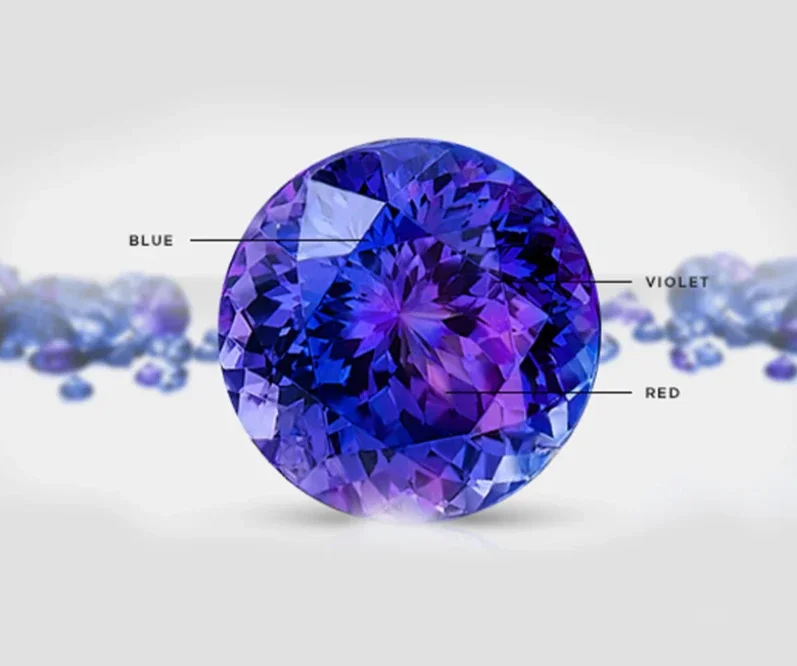
Pleochroism
One of tanzanite’s defining characteristics is pleochroism, meaning it shows different colours when viewed from different angles.
A single stone may display blue, violet, and even burgundy tones depending on orientation and lighting. Skilled cutting is essential to maximise the most desirable face-up colour.
Tanzanite vs Other Blue Gemstones
Beginners often compare tanzanite to sapphires or aquamarines.
Sapphire is harder and extremely durable, often chosen for everyday wear.
Aquamarine offers lighter blue tones and excellent durability.
Tanzanite stands apart for its depth of colour, rarity, and emotional symbolism.
Tanzanite is chosen not because it imitates other gemstones, but because it offers something entirely its own.
Durability and Everyday Wear
Tanzanite ranks lower on the Mohs scale than sapphire or diamond, meaning it requires thoughtful design when used in jewellery.
This does not mean tanzanite is unsuitable for engagement rings or daily wear. It means:
settings must protect the stone
low-profile designs are often preferred
prongs and bezels must be engineered carefully
lifestyle considerations matter
At Layaz, tanzanite settings are designed around the gemstone’s natural properties rather than forcing it into generic designs.
How to Choose a High-Quality Tanzanite
For beginners, quality can feel overwhelming. Focus on these core factors:
Colour
Prioritise rich saturation and a pleasing balance of blue and violet.
Cut
A well-cut tanzanite maximises colour and minimises windowing. Cut quality directly affects brilliance.
Clarity
Most tanzanite contains some inclusions. Look for stones that appear clean to the eye.
Size vs Colour
Larger stones may appear lighter. Sometimes a slightly smaller stone offers better colour intensity.
Certification
Independent certification provides reassurance of authenticity and disclosure.
Tanzanite in Fine Jewellery
Tanzanite is often chosen for jewellery that marks meaningful moments rather than trends.
Common applications include:
engagement rings for those seeking something unconventional
pendants symbolising milestones or personal growth
earrings where colour can be appreciated from multiple angles
Because tanzanite is naturally expressive, designs are often refined and minimalist, allowing the gemstone to remain the focus.
Case Study: Tanzanite Engagement Ring (Auckland)
An Auckland-based client wanted an engagement ring that felt personal and unlike traditional diamond solitaires.
After discussing colour preferences and lifestyle, several natural tanzanite options were presented virtually and in person. A balanced blue-violet stone was selected, and a low-set design was created to protect the gemstone without compromising elegance.
The final ring felt distinctive, meaningful, and intentionally designed around the stone rather than trend expectations.
Case Study: Tanzanite Milestone Pendant (Virtual Consultation)
A client based outside Auckland commissioned a tanzanite pendant to mark a significant personal milestone.
Through virtual consultations, gemstone options were reviewed in detail. A richly saturated tanzanite was chosen and set in a minimalist pendant that allowed light to pass through freely.
The finished piece was delivered insured, and the client later described it as deeply symbolic rather than purely decorative.
Caring for Tanzanite Jewellery
Proper care preserves both beauty and longevity.
Avoid wearing tanzanite during heavy physical activity
Clean gently with warm water and mild soap
Avoid ultrasonic cleaners
Store separately to prevent scratching
With thoughtful care, tanzanite jewellery can be enjoyed for generations.
Coming from Instagram?
If you discovered this article through Layaz’s Gemstone Spotlight: Tanzanite series on Instagram, this guide provides the deeper context behind those visuals.
Understanding tanzanite’s origin, rarity, and care allows you to choose it with confidence rather than impulse.
Why Tanzanite Resonates So Deeply
Tanzanite is not a gemstone chosen casually.
Its single-source origin, finite supply, and expressive colour make it symbolic of new chapters, individuality, and intentional choices.
For those who value meaning over convention, tanzanite offers something genuinely rare.
