

How Jewellery Is Made: Inside the Bespoke Crafting Process
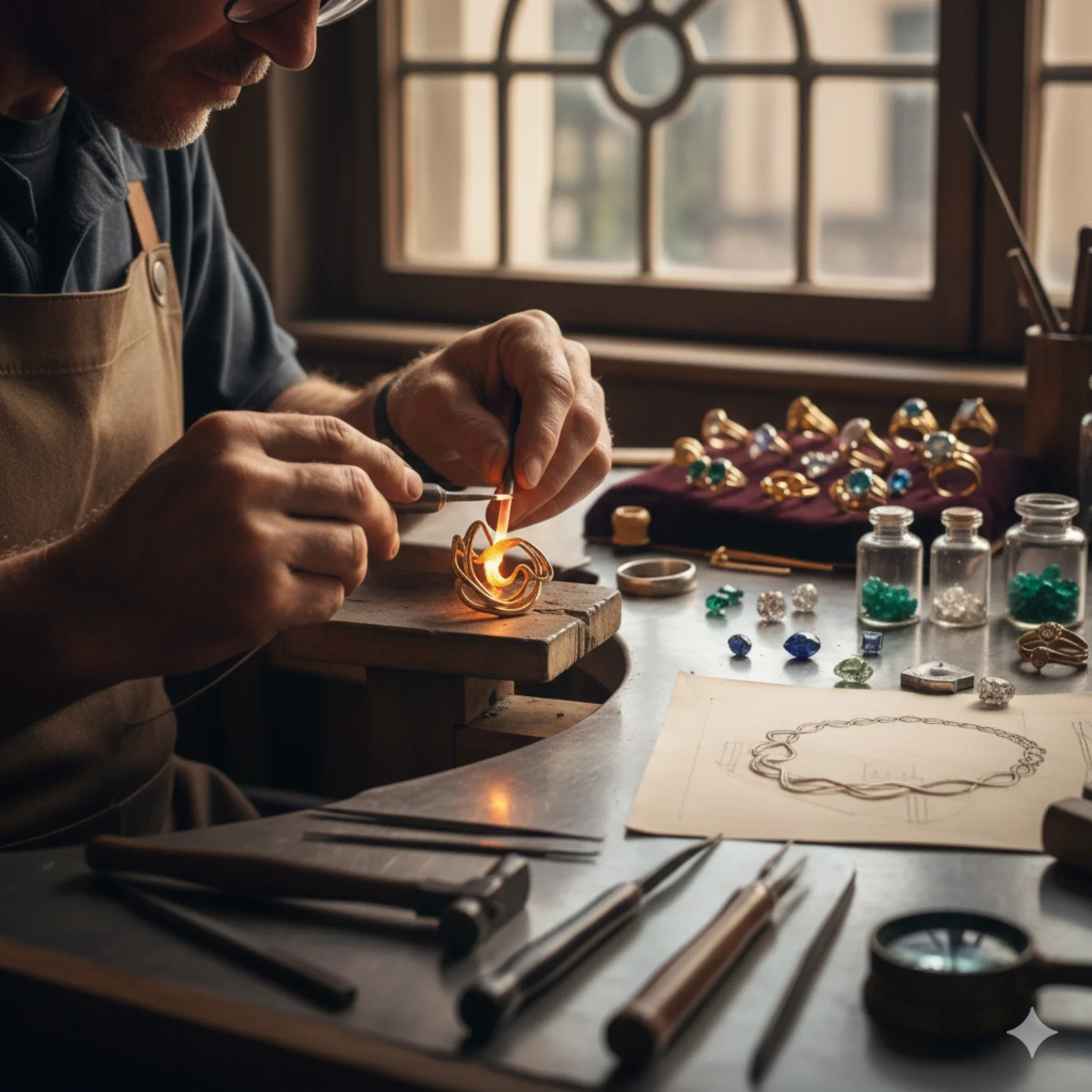
Many people wear fine jewellery every day without ever knowing how it is actually made.
When someone searches “how jewellery is made,” they are often curious about what happens behind the scenes. Others are preparing to commission a bespoke piece and want to understand what they are paying for. These two audiences overlap more than people realise.
This guide explains how fine jewellery is made through a bespoke process, from the first conversation to the finished piece. It is written for complete beginners and designed to clarify the difference between mass-produced jewellery and true custom craftsmanship.
Mass-Produced Jewellery vs Bespoke Fine Jewellery
Before exploring the bespoke process, it is important to understand how most jewellery is made today.
Mass-produced jewellery is designed for scale. Pieces are created in bulk, often overseas, using pre-determined moulds and standardised gemstone settings. These designs prioritise efficiency, not individuality.
Bespoke fine jewellery is fundamentally different.
In a bespoke process:
Each piece is designed from scratch
Proportions are tailored to the wearer
Gemstones are sourced intentionally
Craftsmanship prioritises longevity, not speed
When jewellery is made bespoke, the process becomes collaborative rather than transactional.
Step One: The Initial Consultation
Every bespoke piece begins with a conversation.
At Layaz, consultations are available nationally across New Zealand, with a strong focus on Auckland. Clients can meet in person or virtually, Monday to Sunday, from 9am to 7pm. Each consultation lasts approximately 45 minutes and is offered free of charge.
This stage is not about selling a design. It is about understanding:
who the jewellery is for
how it will be worn
lifestyle considerations
aesthetic preferences
budget framework
emotional or symbolic meaning
For many clients, this is their first time commissioning jewellery. The goal of the consultation is clarity, not pressure.
Step Two: Design and Concept Development
Once the brief is clear, the design stage begins.
Within 2 to 3 working days, clients receive:
hand sketches or design concepts
multiple design directions
clear pricing frameworks for each option
This stage allows comparison. Clients can see how different proportions, settings, and gemstone placements affect both appearance and cost.
Design is never rushed. Refinements are encouraged until the design feels resolved.
Understanding CAD in Jewellery Design
Many people hear the term CAD without knowing what it actually means.
CAD stands for Computer-Aided Design. In jewellery, CAD is used to precisely model a piece before it is made.
CAD allows jewellers to:
test proportions
design for comfort
ensure stone security
refine structural details
visualise the finished piece accurately
At Layaz, CAD is used as a design tool, not a shortcut. It enhances precision while still allowing for craftsmanship in the making stage.
Replica Rings and Wax Models
Before any precious materials are used, clients are given the opportunity to approve a physical model.
This may take the form of:
a wax model, or
an exact replica ring set with simulated gemstones
This step is critical. It allows clients to:
feel the scale on the hand
assess comfort
visualise proportions
confirm design details
Only once this model is approved does production move forward.
Step Three: Gemstone Sourcing
Gemstones are the heart of fine jewellery, and sourcing them requires expertise.
Layaz works exclusively with natural gemstones. No lab-grown stones are used.
Gemstones commonly sourced include:
natural diamonds
natural sapphires
natural rubies
natural emeralds
natural alexandrite
Each gemstone is evaluated for:
colour
clarity
cut quality
durability
suitability for the intended design
Diamonds are accompanied by independent GIA certification. Coloured gemstones are also certified where applicable.
Clients are guided through trade-offs transparently, such as choosing between size and colour intensity or balancing rarity with budget.
Step Four: Crafting the Jewellery In-House
Once the design and gemstone are approved, the crafting stage begins.
Layaz produces jewellery in-house, end-to-end, without outsourcing core stages. This level of control ensures consistency, quality, and accountability.
Metal Selection
The appropriate metal is chosen based on design and lifestyle, such as platinum or high-purity gold alloys.
Forming the Piece
Depending on the design, the piece may be cast or hand-fabricated. This decision is based on structural requirements rather than speed.
Stone Setting
Gemstones are set by experienced setters who understand the specific needs of natural stones. Settings are engineered for security and longevity, not minimal metal usage.
Polishing and Finishing
Finishing transforms a piece from well-made to exceptional. Edges are softened for comfort, surfaces refined, and proportions balanced.
Quality Control and Final Approval
Before delivery, clients receive detailed images and videos of the finished piece.
This stage allows final confirmation that:
the design matches approvals
the gemstone is set correctly
finishing meets expectations
Only after client approval is the piece prepared for delivery.
Delivery and Aftercare
Jewellery is delivered securely and insured.
Layaz provides a seven year manufacturing warranty, reflecting confidence in structural integrity and craftsmanship.
Clients are also advised on:
care
cleaning
maintenance
resizing considerations
Bespoke jewellery is designed to last, but aftercare ensures it continues to do so.
Case Study: Bespoke Engagement Ring in Auckland
An Auckland-based client commissioned a minimalist engagement ring with a natural sapphire.
After exploring several design options, a low-set design was chosen to suit daily wear. Multiple sapphire options were reviewed, balancing colour intensity and durability.
Through CAD, replica approval, and in-house crafting, the final ring achieved a refined appearance without sacrificing structural strength.
Case Study: Virtual Heirloom Redesign from Christchurch
A client in Christchurch inherited several sentimental pieces that were rarely worn.
Through virtual consultations, Layaz redesigned the jewellery by melting existing gold and creating a modern piece that preserved emotional value while improving wearability.
Despite the distance, the process remained collaborative, transparent, and controlled at every stage.
Why Bespoke Jewellery Feels Different
When jewellery is made bespoke, it carries intention.
Every decision, from gemstone selection to band thickness, is made consciously. This results in jewellery that feels personal, balanced, and enduring.
Understanding how jewellery is made allows clients to recognise quality beyond surface beauty.
How Jewellery Is Made, Reimagined
Fine jewellery is not simply assembled. It is designed, engineered, and crafted through a series of deliberate steps.
For those seeking more than decoration, the bespoke process offers clarity, confidence, and meaning.
