

Engagement Ring Anatomy Explained: Ring Settings, Structure, and What Actually Matters
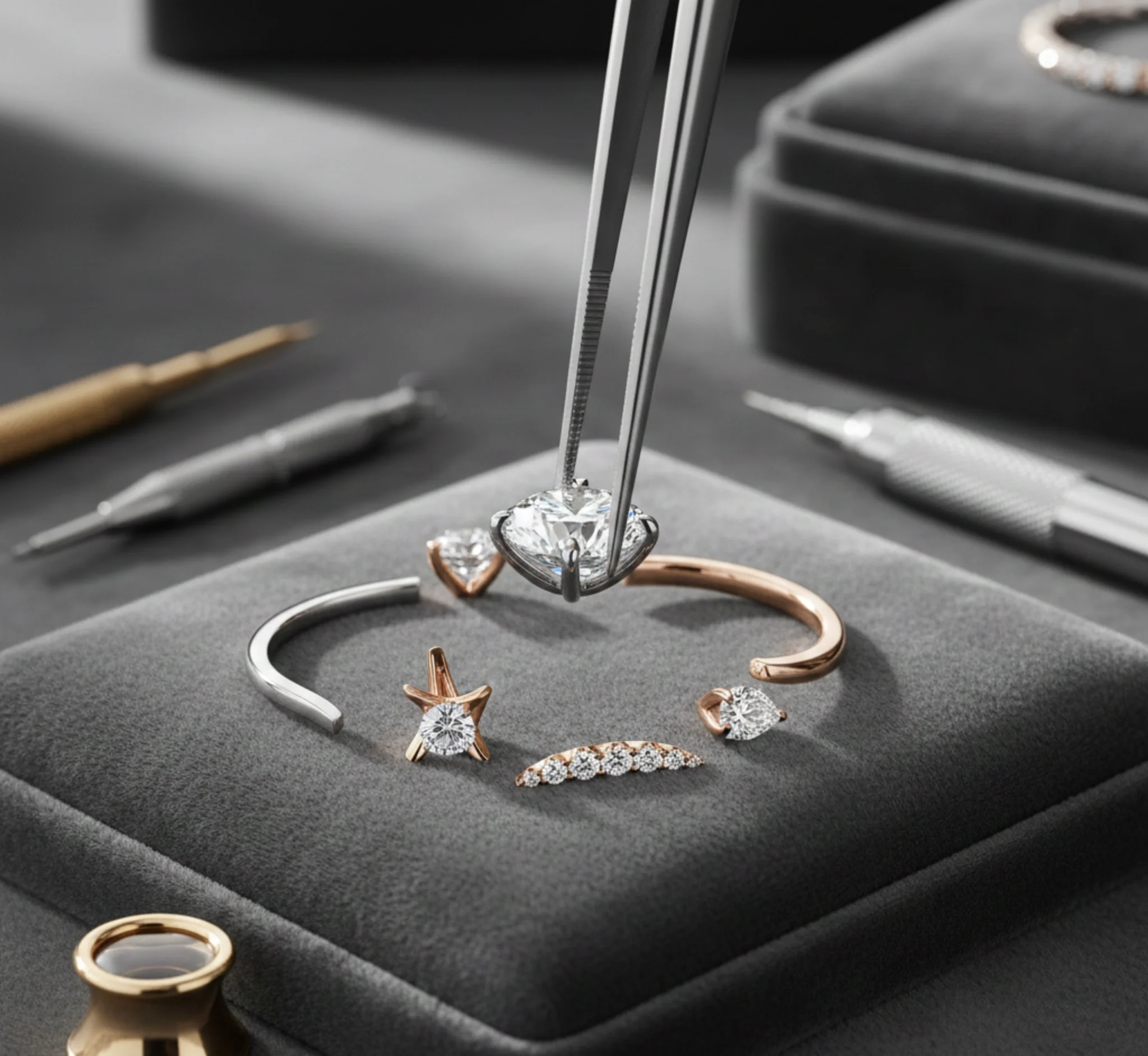
If you have ever looked at an engagement ring and thought, “I like it, but I don’t know why,” you are not alone.
Most people have never been taught how a ring is built. They may recognise a halo or a solitaire, but few understand how ring settings work, why some rings feel comfortable while others do not, or why two rings that look similar can differ dramatically in quality, durability, and long-term wear.
This guide expands on Layaz’s Anatomy of a Ring series and explains, in clear and simple terms, how an engagement ring is structured, what each part does, and which details genuinely matter when designing fine jewellery with natural gemstones.
Why Understanding Engagement Ring Anatomy Matters
An engagement ring is worn every day. It is exposed to impact, pressure, temperature changes, and constant contact with surfaces.
When ring anatomy is poorly designed, issues rarely appear immediately. They emerge over years:
gemstones loosen or chip
bands thin unevenly
rings lose symmetry
settings catch or bend
comfort deteriorates
Understanding ring anatomy allows you to make decisions based on longevity rather than surface appearance. It also gives you the confidence to ask the right questions when commissioning custom jewellery.
The Core Parts of an Engagement Ring
While styles vary, every well-made engagement ring consists of several fundamental components. Each plays a distinct role in how the ring looks, feels, and lasts.
The Band (Shank): Comfort, Balance, and Longevity
The band forms the circular foundation of the ring. It determines how the ring feels on the hand and how it withstands daily wear.
In minimalist fine jewellery, the band must appear refined while maintaining enough metal to support the setting over decades. A band that is too thin may look elegant initially but will wear down faster, especially at the base where friction is constant.
At Layaz, band proportions are carefully engineered to:
retain a clean, minimalist profile
avoid pressure points on the finger
resist warping over time
support resizing in the future
True minimalism is about restraint, not fragility.
Band Width vs Band Thickness
These two elements are often confused.
Width affects visual presence.
Thickness affects strength and longevity.
A ring can appear slim while still being structurally sound if thickness is maintained correctly. This balance is one of the clearest indicators of craftsmanship.
The Head (Setting): The Engineering Core
The head is the structure that holds the gemstone. It is the most technically demanding part of ring anatomy.
A well-designed head must:
hold the gemstone securely
distribute stress evenly
protect vulnerable points of the stone
allow light to enter naturally
maintain symmetry from every angle
Poorly designed heads often prioritise appearance over engineering. Common issues include prongs that are too thin, seats cut too shallow, or heads positioned too high above the finger.
These flaws may not be obvious at first, but they significantly increase the risk of stone damage or loss.
Prongs, Bezels, and Stone Security
Different ring settings secure gemstones in different ways. The correct choice depends on both aesthetic preference and the gemstone itself.
Prong Settings
Prongs lift the gemstone and allow maximum light exposure. They are popular for solitaires and minimalist designs.
However, prongs must be precisely shaped and proportioned. Overly thin prongs may look delicate but wear down quickly. Poor alignment can also compromise stone security.
Bezel Settings
Bezels encase the gemstone with metal. They offer excellent protection and are ideal for active lifestyles.
A well-made bezel should follow the exact contour of the stone. Poorly executed bezels can dull brilliance or appear heavy.
Hybrid Settings
Hybrid designs combine prongs and bezels, offering balance between openness and protection. These require advanced craftsmanship to execute cleanly.
When working with natural gemstones, security is never optional. Each stone has its own hardness, cleavage, and vulnerability, which must be respected in the design.
The Shoulders: Stability and Visual Flow
The shoulders connect the band to the head and guide the eye toward the gemstone.
Well-designed shoulders:
distribute weight evenly
support the head structurally
prevent bending over time
create visual harmony
Abrupt or poorly supported shoulders are a common failure point in mass-produced rings. Over time, they can cause settings to tilt or lose alignment.
The Gallery: Where Craftsmanship Becomes Visible
The gallery sits beneath the gemstone and is often overlooked by buyers.
In fine jewellery, the gallery serves several critical purposes:
reinforces the head
allows airflow and light
protects the stone’s pavilion
contributes to side-profile elegance
At Layaz, the gallery is treated as an architectural element. Even in minimalist designs, it is carefully shaped to provide strength without visual clutter.
Minimalist Design Requires More Precision, Not Less
Minimalist engagement rings are often assumed to be simpler to create. In reality, they demand greater precision.
With less metal and fewer decorative elements:
proportions must be exact
transitions must be smooth
tolerances are tighter
finishing must be flawless
There is no room to hide structural shortcuts.
Minimalist rings must balance delicacy with durability. This balance is only achievable through thoughtful engineering and in-house craftsmanship.
Natural Gemstones and Why Anatomy Must Adapt
Layaz works exclusively with natural gemstones, and this directly influences ring anatomy.
Natural gemstones vary widely in:
hardness
internal structure
sensitivity to impact
reaction to pressure
A setting that works for a diamond may not be suitable for a sapphire, emerald, or other coloured gemstone. Designing around the stone rather than forcing the stone into a generic setting is essential for longevity.
Ring anatomy should always serve the gemstone, not the other way around.
Lifestyle Considerations in Ring Anatomy
A well-designed engagement ring should suit how it will be worn.
Considerations include:
daily hand use
occupation
physical activity
comfort preferences
Low-set heads, reinforced shoulders, and thoughtful band curvature can dramatically improve wearability without altering the ring’s appearance.
These considerations are often overlooked in ready-made designs.
Quiet Red Flags in Ring Construction
Some quality issues are not immediately obvious. Over time, however, they become unavoidable.
Watch for:
bands that taper excessively thin at the base
prongs that feel sharp or uneven
heads that sit unusually high without support
hollowed galleries masked by polish
asymmetry when viewed from the side
These signs often indicate cost-cutting rather than craftsmanship.
Case Study: Auckland Custom Engagement Ring
A client in Auckland approached Layaz seeking a minimalist solitaire. Previous designs they had seen featured extremely thin bands and exposed prongs.
Through consultation, the band thickness was subtly increased while preserving a refined profile. The shoulders were reinforced, and a custom head was engineered to sit lower on the hand without sacrificing light performance.
The finished ring appeared just as delicate but offered significantly improved comfort, balance, and durability.
Case Study: Christchurch Virtual Consultation
A Christchurch-based client commissioned an engagement ring through virtual consultations. Their concern was whether a remote process could deliver the same level of precision.
Through CAD renders, wax model approval, and detailed video walkthroughs, the anatomy of the ring was refined collaboratively. Particular attention was given to prong geometry and gallery structure to suit a natural gemstone with specific durability considerations.
After delivery, a minor adjustment was requested and completed smoothly, reinforcing trust in the process.
Coming from Instagram?
If you discovered this guide through Layaz’s Anatomy of a Ring Instagram series, this article provides the deeper context behind those visuals.
Understanding ring anatomy allows you to recognise quality beyond surface beauty and make informed decisions with confidence.
Why Ring Anatomy Defines Fine Jewellery
An engagement ring is not just a decorative object. It is an engineered piece of fine jewellery designed to be worn every day and passed down over time.
When anatomy is considered thoughtfully, the result is jewellery that feels effortless, secure, and enduring.
That is the difference between a ring that simply looks beautiful and one that truly lasts.
