

Jewellery Hallmarks Explained: What They Mean and Why They Protect You
When buying fine jewellery, most people focus on the gemstone or the design. Few stop to ask one of the most important questions of all: how do I know this jewellery is what it claims to be?
This is where jewellery hallmarks matter.
Hallmarks exist to protect buyers. They indicate metal purity, accountability, and quality assurance. Yet for many clients, especially first-time buyers, hallmarks are misunderstood, overlooked, or assumed to be decorative rather than meaningful.
This guide explains what jewellery hallmarks really mean, how they work in New Zealand and internationally, why unhallmarked jewellery can be risky, and how Layaz ensures quality far beyond a simple stamp.
What Are Jewellery Hallmarks?
A jewellery hallmark is a mark stamped or engraved onto a piece of jewellery to indicate information about the metal.
Depending on the country and system, hallmarks can show:
the type of metal
the metal’s purity
the maker or brand responsible
where the piece was verified or produced
In essence, hallmarks exist to answer one critical question:
Is this jewellery made from what the seller claims it is?
Why Jewellery Hallmarks Exist
Historically, hallmarks were introduced to protect consumers from fraud.
Precious metals look similar to the untrained eye. Without verification, lower-purity alloys could easily be sold as solid gold or platinum. Hallmarking systems were created to:
prevent misrepresentation
enforce accountability
establish trust between maker and buyer
Today, hallmarks remain one of the most important trust signals in fine jewellery, particularly for pieces intended to last generations.
Common Jewellery Hallmarks You May See
While symbols and formats vary, these are some of the most common fineness marks used internationally.
Gold Hallmarks
750 or 18K – 75% pure gold
585 or 14K – 58.5% pure gold
Platinum Hallmarks
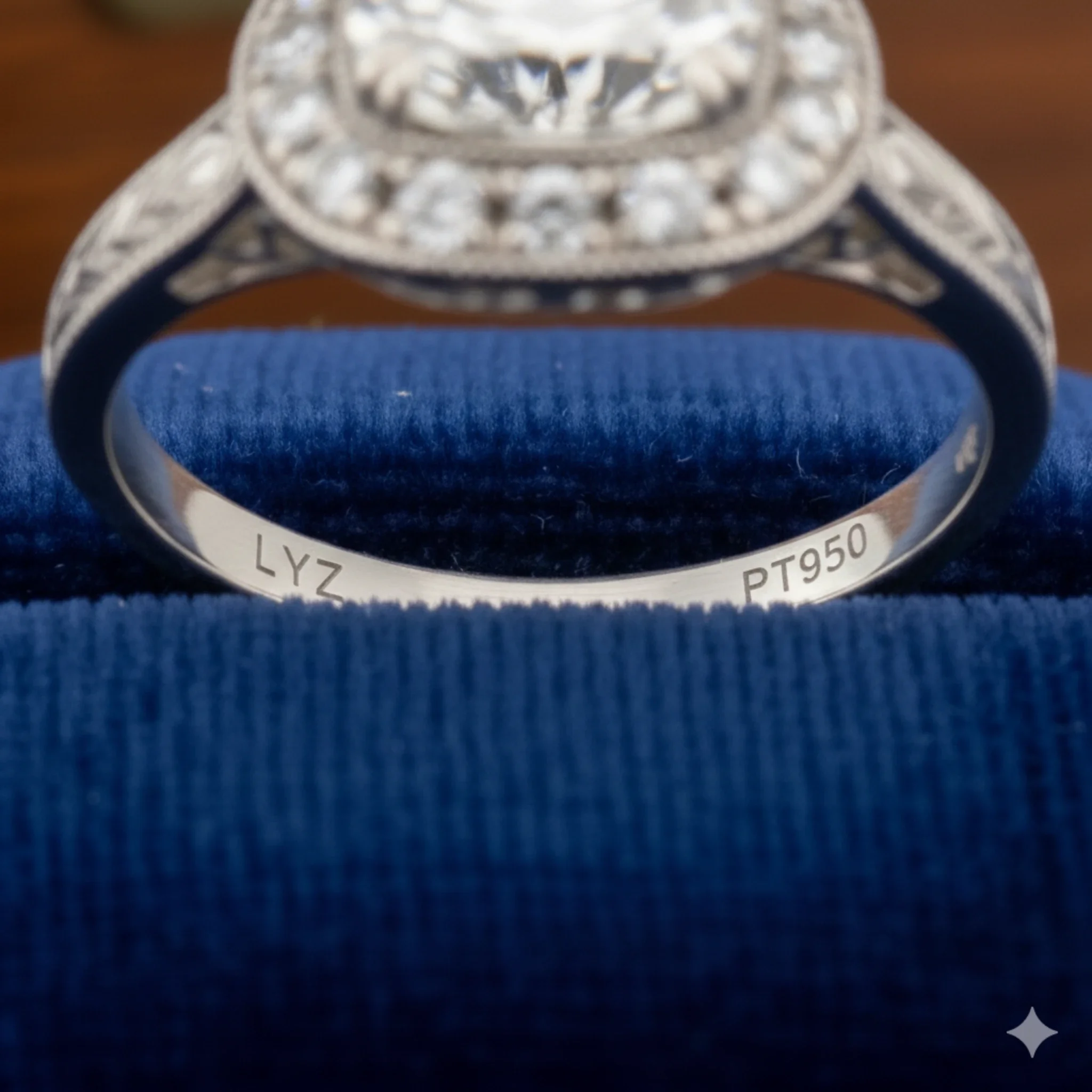
PT950 – 95% pure platinum
These numbers indicate metal purity, not quality of craftsmanship. A hallmark confirms material composition, but it does not guarantee how well the jewellery is made.
Where to Find a Hallmark on Jewellery
Many buyers assume their jewellery has no hallmark simply because they cannot find it.
In reality, hallmarks are placed discreetly to preserve aesthetics.
Common locations include:
inside the band of a ring
on the back of a pendant bail
on the clasp of a bracelet or necklace
on an inner surface of earrings (where size permits)
The absence of a visible hallmark should always prompt a question, not an assumption.
Jewellery Hallmarks in New Zealand: What You Need to Know
This is where confusion often arises.
New Zealand does not operate a compulsory government-run hallmarking system in the same way the United Kingdom does. There is no national assay office that automatically stamps jewellery before sale.
This means:
hallmarks in NZ rely on jeweller accountability
standards vary between sellers
buyers must rely on transparency and documentation
In practice, reputable jewellers follow internationally recognised fineness standards and provide clear quality assurance rather than vague or misleading stamps.
Jewellery Hallmarks in the United Kingdom
The UK has one of the most established hallmarking systems in the world.
Under UK law, precious metal jewellery must be independently tested and hallmarked by an official assay office before it can be sold as gold, platinum, or silver.
UK hallmarks typically include:
a fineness mark
an assay office mark
a maker’s mark
This system offers strong consumer protection and is often considered the global benchmark.
Jewellery Marking in the United States
The United States does not have compulsory hallmarking in the same way as the UK.
Instead, jewellery is governed by truth-in-advertising laws. If a piece is marked or described as a certain metal purity, it must be accurate.
The U.S. Federal Trade Commission provides guidance on jewellery marking and advertising practices.
Why Unhallmarked Jewellery Is Risky
Unhallmarked or vaguely marked jewellery is one of the biggest risks for buyers.
Common issues include:
metal purity that does not match claims
plated jewellery sold as solid
unofficial stamps that look legitimate but mean nothing
difficulty with resale or valuation
lack of accountability if a piece fails
Without a clear hallmark and supporting documentation, buyers have little recourse if something goes wrong.
Hallmarks vs Stamps vs Logos
Not all marks are equal.
Hallmarks indicate metal purity and compliance with recognised standards
Stamps may simply state a number without verification
Logos or maker’s marks identify who made the piece but not its purity
A logo alone does not confirm quality. It must be accompanied by meaningful standards and documentation.
How Layaz Uses Hallmarks
Layaz follows internationally recognised fineness standards for all precious metals used.
Where applicable, jewellery is marked with:
appropriate gold or platinum fineness marks
the Layaz maker’s mark LYZ
optional complimentary engraving at the client’s request
Marks are applied discreetly, respecting the design while ensuring traceability.
Hallmarks Are One Layer of Trust. Quality Assurance Is the Full System.
This distinction matters.
A hallmark confirms metal purity. It does not confirm:
structural integrity
gemstone authenticity
setting security
longevity of wear
At Layaz, hallmarks are one component of a broader quality assurance framework.
That framework includes:
end-to-end in-house production
certification for coloured gemstones
staged design and production approvals
final quality control before delivery
a seven-year manufacturing warranty
This system ensures that what you receive is not only genuine, but built to last.
Case Study: Hallmarks Protecting a Buyer
A client approached Layaz to redeisgn a family heirloom, after discovering their previously purchased “solid gold” ring lacked any meaningful fineness mark or documentation.
Independent testing revealed the metal purity was significantly lower than claimed. The absence of a proper hallmark left the client without recourse.
This experience reinforced the importance of transparency and verification when purchasing fine jewellery.
Case Study: Layaz Quality Assurance in Practice
A bespoke piece commissioned through Layaz included:
documented metal purity
gemstone certification
CAD approvals
replica confirmation
final inspection prior to delivery
The hallmark confirmed material authenticity, while the broader process ensured craftsmanship, comfort, and durability.
This is how hallmarks work best when supported by full accountability.
How to Protect Yourself as a Buyer
When purchasing fine jewellery, always ask:
What does this hallmark mean?
Is the metal purity documented?
Who is accountable for this piece?
What warranty or aftercare is provided?
A reputable jeweller will welcome these questions.
Jewellery Hallmarks and Trust
Hallmarks are not decorative details. They are a promise.
They exist to protect you from uncertainty, misrepresentation, and compromise. When paired with robust quality assurance, they allow you to buy jewellery with confidence rather than assumption.
Understanding jewellery hallmarks empowers you to recognise true quality and avoid unnecessary risk.
