

Jewellery Without Nickel: Why Skin Sensitivity Starts With Metal Choice
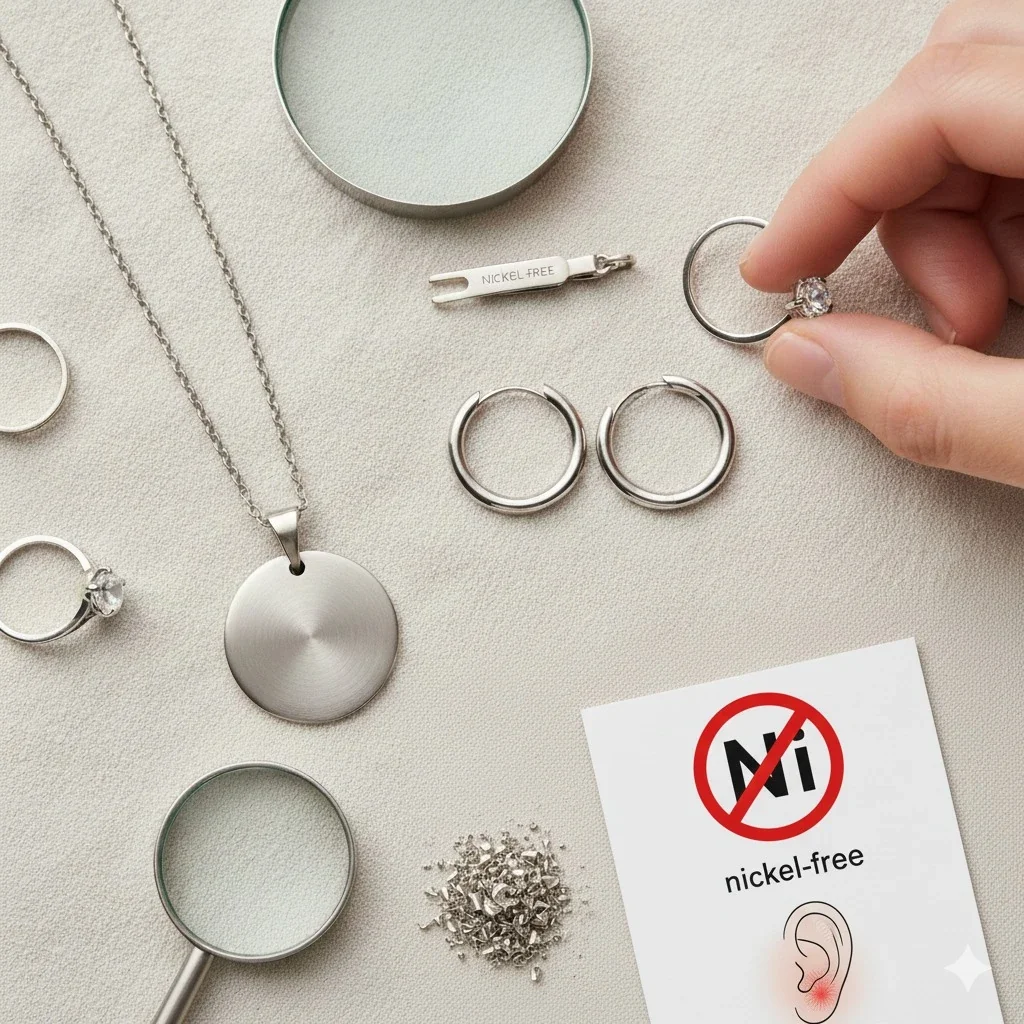
For many people, jewellery discomfort begins quietly.
It may start as redness beneath a ring, itchiness around an earring post, or a persistent rash that never quite clears. Often, the jewellery itself is blamed in vague terms, but the real cause is far more specific.
In most cases, the culprit is nickel.
This guide explains what nickel sensitivity is, why it is so common, how metal choice affects your skin, and why jewellery without nickel is not just a comfort preference but a quality decision. It is written for beginners who want clear answers and for those who have struggled with irritation without understanding why.
Why Nickel Is a Problem in Jewellery
Nickel is one of the most common causes of allergic contact dermatitis worldwide. When nickel comes into contact with the skin, especially over prolonged periods, it can trigger itching, redness, blistering, or eczema flare-ups.
In jewellery, nickel is often used because it is:
inexpensive
strong
easy to alloy
Unfortunately, it is also one of the most reactive metals for sensitive skin.
Even small amounts of nickel, released gradually through sweat and friction, can cause ongoing reactions. This is why many people experience issues with rings, earrings, and necklaces that sit directly against the skin.
What “Jewellery Without Nickel” Actually Means
The phrase “nickel-free” is often used loosely, especially in fashion jewellery.
In reality, jewellery without nickel means:
no intentional nickel added to metal alloys
strict control over metal composition
Some jewellery marketed as “nickel-free” may still release trace amounts of nickel over time. This is why quality assurance and alloy selection matter far more than marketing claims.
At Layaz, jewellery is completely nickel-free by design, not by assumption.
Why Skin Sensitivity Is Often Triggered by Earrings First
Earrings are one of the most common sources of nickel reactions, particularly for:
new piercings
sensitive skin
prolonged daily wear
The skin on the ears is thin and more reactive. Cheap earring posts often contain nickel, even when plated.
For people in Auckland, Tauranga, Hamilton, and across New Zealand, recurring ear irritation is often the first sign of metal sensitivity rather than poor hygiene or healing issues.
Hypoallergenic Metals Explained Simply
The term “hypoallergenic” does not mean a metal will never cause a reaction. It means the metal carries a lower risk for most people.
In fine jewellery, the most skin-friendly metals are those with:
high purity
stable alloy composition
low reactivity
This is why metal choice is foundational, not optional.
Platinum: The Gold Standard for Sensitive Skin
Platinum 950 (PT950) is one of the most hypoallergenic metals used in fine jewellery.
Platinum:
contains 95% pure platinum
does not require nickel for strength
does not corrode or wear away
is naturally white and does not need plating
For clients with severe sensitivity or eczema, platinum is often the safest long-term option.
At Layaz, platinum is frequently recommended for engagement rings and daily-wear jewellery for clients with known skin reactions.
Why High-Quality Gold Alloys Matter
Many people assume that gold is always safe. This is not entirely true.
Gold itself is inert, but gold jewellery is made from alloys, not pure gold. The other metals mixed with gold determine how it behaves on the skin.
Two 18K Rings Can Feel Completely Different
An 18K ring can be:
comfortable and skin-safe
or irritating and reactive
The difference lies in the alloy.
At Layaz:
18K and 14K white gold are alloyed with palladium, not nickel
white gold is finished with rhodium plating that meets EU standard requirements
yellow and rose gold alloys are carefully controlled for purity and balance
This approach ensures strength without compromising skin health.
For clients who prefer, platinum is always offered as an alternative.
White Gold and Skin Sensitivity
White gold is often misunderstood.
Some white gold on the market contains nickel to achieve colour and strength. This is where many reactions originate.
Layaz avoids nickel entirely. Palladium is used instead, creating:
a more skin-friendly alloy
improved long-term comfort
compatibility with sensitive skin
Rhodium plating is applied to enhance whiteness and durability, following established UK standards.
Jewellery Without Nickel and EU Safety Standards
When it comes to nickel exposure, the European Union has some of the strictest regulations in the world.
Under EU REACH regulations, jewellery must meet strict limits on nickel release to be considered safe for prolonged skin contact.
Layaz follows these EU standards even when producing jewellery for New Zealand clients. This provides an additional layer of reassurance beyond local requirements.
Why Bespoke Jewellery Gives You Control Over Materials
One of the biggest advantages of bespoke jewellery is control.
When you choose ready-made jewellery, you inherit the metal choices already made for you. With bespoke jewellery:
alloys are specified intentionally
metal purity is documented
sensitive skin considerations are addressed upfront
For clients in Auckland, Tauranga, Hamilton, and across New Zealand, bespoke design allows jewellery to be tailored not just to style, but to health and comfort.
This is especially important for:
engagement rings
wedding bands
daily-wear earrings
What To Do If Jewellery Causes a Reaction
If you experience irritation from jewellery:
remove the piece immediately
allow skin to heal fully
avoid re-exposure
consult a medical professional if symptoms persist
This guidance aligns with dermatologist recommendations and helps prevent chronic reactions.
Case Study: Auckland Client With Nickel Sensitivity
An Auckland-based client came to Layaz after years of irritation from rings.
After discussing symptoms and lifestyle, a platinum ring was recommended. The difference was immediate. The irritation resolved completely once nickel exposure was eliminated.
This case highlighted how material choice, not design, was the underlying issue.
Case Study: Tauranga Client Switching From Fashion Jewellery
A Tauranga-based client experienced recurring rashes from earrings and necklaces purchased from mainstream retailers.
Through bespoke consultation, jewellery was created using palladium-based white gold and controlled alloys. The result was jewellery that could be worn daily without discomfort.
This shift demonstrated how proper alloy selection changes the experience of wearing jewellery entirely.
Why Jewellery Without Nickel Is a Quality Issue, Not a Trend
Nickel-free jewellery is often discussed as a niche requirement. In reality, it reflects:
better material choices
higher manufacturing standards
greater transparency
Skin reactions are not a normal part of wearing fine jewellery.
When jewellery is made correctly, it should feel effortless on the skin.
Choosing Jewellery With Confidence
When buying jewellery, especially for sensitive skin, ask:
what metals are used in the alloy?
is the jewellery nickel-free by design?
does the jeweller follow recognised standards?
is documentation available?
A jeweller who prioritises comfort will welcome these questions.
Jewellery Without Nickel, Done Properly
Skin sensitivity often reveals what marketing hides.
When jewellery is made with care, knowledge, and integrity, it becomes something you can wear without thinking about it at all. That is the true mark of quality.
