

Jewellery Redesign in NZ: How to Transform Old Jewellery Into a Modern Heirloom
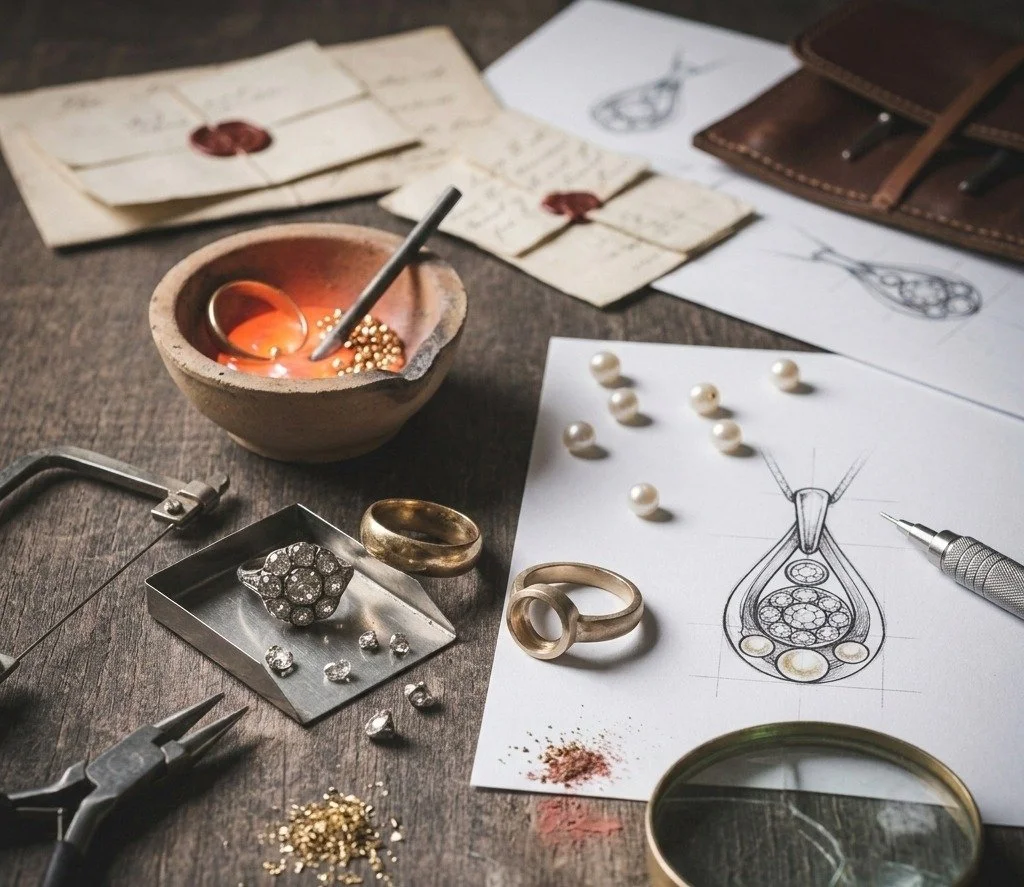
Many people in New Zealand own jewellery that carries meaning but rarely gets worn.
A ring inherited from a grandmother may feel too traditional. A pendant received years ago may no longer match personal style. A collection of small pieces may sit in a drawer because none feel quite right anymore.
This is where jewellery redesign becomes powerful.
Jewellery redesign allows existing gemstones and precious metals to be transformed into a completely new piece while preserving the sentimental value behind them. Instead of discarding jewellery that no longer feels relevant, redesign gives it a second life.
For many clients, the result is something even more meaningful than the original.
Why Jewellery Redesign Is Becoming More Popular in NZ
Across New Zealand, more people are choosing jewellery redesign rather than buying something new.
There are several reasons for this shift.
First, many people inherit jewellery from parents or grandparents that carries emotional significance but does not suit modern tastes. Redesign allows that heritage to continue in a form that feels personal.
Second, sustainability has become an important consideration. Precious metals and gemstones already exist within older jewellery, and redesign allows those materials to be reused rather than replaced.
Finally, redesign often produces jewellery that feels far more personal than a ready-made piece.
Instead of choosing from a display, the design evolves around your story.
What Jewellery Redesign Actually Means
Jewellery redesign is sometimes confused with jewellery repair, but the two are very different.
A repair aims to restore a piece back to its original state.
Jewellery redesign transforms it into something entirely new.
The goal is not simply to fix an old ring or polish a bracelet. The goal is to create a new design that reflects your current style while preserving the history of the original piece.
Redesign can involve reshaping metal, resetting gemstones, combining multiple pieces, or creating an entirely new jewellery concept.
What Can Be Redesigned
Many people assume redesign is only possible with certain types of jewellery, but the reality is far broader.
Jewellery redesign can include:
inherited engagement rings
outdated cluster rings
broken jewellery with intact gemstones
multiple small pieces combined into one design
rings converted into pendants
family heirlooms modernised into minimalist designs
The original piece becomes the starting point rather than the finished product.
What Layaz Jewellery Redesign Can Include
At Layaz, jewellery redesign is approached as a bespoke design process rather than a simple modification.
Redesign may include:
repolishing precious metals
repolishing gemstones
custom cutting or recutting gemstones
resetting stones into a completely new design
melting old gold to form a new piece
combining several pieces of jewellery into one
adding new natural gemstones where appropriate
Because design, gemstone sourcing, and manufacturing are handled in house, the entire transformation can be managed with precision.
Jewellery Redesign vs Jewellery Repair
One of the most common questions clients ask is whether Layaz performs jewellery repairs.
Layaz does not offer repair services as a standalone service.
Instead, the focus is entirely on jewellery redesign and remodelling.
If structural improvements such as replacing missing stones or strengthening a setting are required as part of a redesign, those improvements are incorporated into the new piece. The result is not simply a repaired object but a redesigned one.
The Jewellery Redesign Process
Jewellery redesign follows the same thoughtful process as bespoke jewellery creation, with additional care taken to evaluate the existing materials.
Initial Consultation
The process begins with a 45-minute consultation, available Monday to Sunday from 9am to 7pm, either virtually or in person.
Clients from Auckland suburbs such as Remuera, Parnell, Ponsonby, Herne Bay, and Newmarket often visit in person, while many others connect from Tauranga and across New Zealand through virtual consultations.
During this stage the discussion focuses on:
the story behind the jewellery
what elements should remain
what aspects feel outdated
design direction for the new piece
Design Stage
Within 2–3 working days, clients receive design options along with pricing guidance for each concept.
These options may explore different ways to incorporate existing gemstones or metals.
Clients are shown:
concept sketches
CAD renders
gemstone layout ideas
structural adjustments for durability
The design stage ensures the final direction feels right before production begins.
Replica Model Approval
Before crafting begins, clients are shown an exact replica model, often with simulated gemstones placed in the design.
This allows the wearer to visualise scale, proportions, and comfort before anything permanent is made.
Adjustments can still be made at this stage.
Crafting Stage
Once the design and gemstones are approved, the jewellery enters production.
For redesign projects, crafting typically takes 6 to 8 weeks, depending on the complexity of the transformation and whether gemstones require recutting or additional sourcing.
Because Layaz works in house, the same team that designs the piece oversees its creation.
Staying in Control Throughout the Redesign
Jewellery redesign can feel intimidating because the original piece often carries sentimental weight.
For this reason, the Layaz process involves several approval stages:
design approval
gemstone approval
replica model approval
final piece approval before delivery
confirmation after delivery
If the final jewellery delivered is not what the client envisioned, even after approvals, Layaz will remake the piece at no additional cost.
This approach ensures the redesign process remains collaborative and transparent.
Staying in Control Throughout the Redesign
Jewellery redesign can feel intimidating because the original piece often carries sentimental weight.
For this reason, the Layaz process involves several approval stages:
design approval
gemstone approval
replica model approval
final piece approval before delivery
confirmation after delivery
If the final jewellery delivered is not what the client envisioned, even after approvals, Layaz will remake the piece at no additional cost.
This approach ensures the redesign process remains collaborative and transparent.
Case Study: Auckland Heirloom Ring Redesign
An Auckland client inherited a traditional diamond cluster ring that had been passed through three generations.
Although the ring carried deep sentimental value, its style felt too ornate for everyday wear.
Through consultation, the original diamonds were carefully removed and incorporated into a minimalist design with updated proportions. The final ring honoured the history of the stones while becoming something the client now wears daily.
Case Study: Tauranga Jewellery Transformation
A client in Tauranga had several inherited pieces that had been sitting unworn for years.
Rather than redesigning them individually, the gemstones from multiple pieces were combined into a single pendant design.
The result preserved the meaning of each original piece while creating jewellery that felt cohesive and modern.
What Determines the Cost of Jewellery Redesign
Jewellery redesign projects vary widely depending on complexity.
Redesign typically starts from approximately $2,000, but the final cost depends on several factors.
These include:
complexity of the new design
condition of existing gemstones
whether gemstones require recutting
whether additional stones are added
time required for finishing and quality control
Because each redesign begins with materials that already exist, no two projects are identical.
Jewellery Redesign as a Sustainable Choice
Jewellery redesign also aligns with sustainability.
Precious metals and gemstones are among the few materials that can be reused indefinitely without losing their intrinsic qualities.
By repurposing existing materials, redesign reduces the need for new extraction while preserving the beauty of the original resources.
It is a thoughtful way to respect both the past and the future.
When Jewellery Redesign Makes the Most Sense
Jewellery redesign is particularly valuable when:
jewellery carries sentimental value but feels outdated
inherited pieces do not suit personal style
several small pieces could form one meaningful design
gemstones are beautiful but poorly set
a piece is rarely worn but difficult to part with
In each of these situations, redesign offers a path forward.
A New Chapter for Old Jewellery
Jewellery redesign allows history and modern design to coexist.
Instead of replacing something meaningful, redesign allows that meaning to evolve into something wearable again.
For many clients, the result is not simply a new piece of jewellery.
It is a continuation of a story.
