

Jewellery Designers vs Jewellery Brands: What’s the Real Difference?
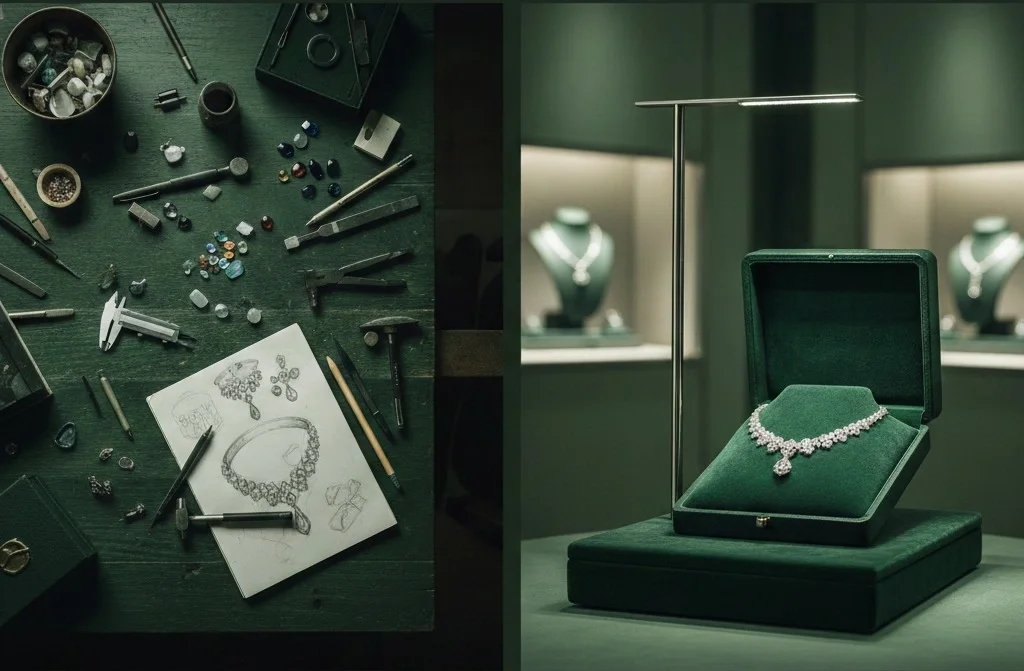
When people search for jewellery designers NZ or jewellery brands NZ, they are rarely just looking for names. They are trying to answer a more important question.
Who should I trust with something that matters?
To most buyers, jewellery designers and jewellery brands appear interchangeable. Both produce beautiful pieces. Both may look premium online. Both often use similar language around quality and craftsmanship.
Yet the difference between the two becomes very clear once you understand how jewellery is actually made, where decisions are taken, and who remains accountable long after a purchase is complete.
This guide explains the real difference between jewellery designers and jewellery brands, so you can make an informed decision rather than a marketing-led one.
Why This Distinction Matters More Than Ever
Jewellery today is more accessible than it has ever been. Online brands, international shipping, and mass production have made it easy to buy something that looks impressive at first glance.
At the same time, buyers are becoming more cautious. They want transparency, longevity, and meaning, not just surface appeal.
This is why the distinction between designer-led jewellery and brand-led jewellery matters more now than it did a decade ago.
What People Mean by “Jewellery Designers” in New Zealand
In its truest sense, a jewellery designer is not a marketing label. It refers to a person or team that takes responsibility for the entire creative and technical journey of a piece.
In New Zealand, genuine jewellery designers typically:
begin with concept sketches
source gemstones intentionally
make design decisions around specific stones
control proportions, durability, and comfort
oversee or carry out manufacturing
remain accountable after the piece is delivered
At Layaz, jewellery design means full control, from sketching to stone sourcing, custom cutting gemstones where required, casting, finishing, and final quality checks. Everything is handled in house.
This level of involvement fundamentally changes the outcome.
What “Jewellery Brands” Usually Mean
Jewellery brands operate very differently.
Most jewellery brands:
work with pre-designed collections
prioritise consistency over individuality
rely on external manufacturers
source stones in large batches
focus on seasonal releases and trend cycles
This model is not inherently wrong. It works well for fashion-driven jewellery and for buyers who want immediate availability.
However, it limits how personal, adaptable, and enduring a piece can be.
The Core Difference: Decision-Making Power
The real difference between jewellery designers and jewellery brands lies in where decisions are made.
With a designer:
decisions are made around you and the stone
designs evolve through conversation
proportions are adjusted for comfort and wear
materials are selected intentionally
With a brand:
decisions are made before you ever see the piece
designs are fixed
materials are standardised
personalisation is usually limited
This difference becomes especially important when jewellery carries emotional or long-term significance.
Transparency and Traceability
Designer-led jewellery offers clarity.
When you work with a jewellery designer, you can usually trace:
where the gemstone came from
why a particular cut was chosen
how the metal was alloyed
who made the piece
This transparency is harder to achieve with brand jewellery, where sourcing and manufacturing are often abstracted away.
At Layaz, transparency is built into the process rather than added later.
Auckland Trust Signals: Why Place Still Matters
Although Layaz works with clients across New Zealand, Auckland plays an important role in building trust.
Many clients visit from areas such as Remuera, Parnell, Ponsonby, Herne Bay, Newmarket, and the CBD. These in-person conversations allow buyers to see gemstones, review designs, and understand the process fully.
Auckland’s proximity to skilled trades, logistics, and long-established jewellery expertise also supports higher manufacturing standards.
For clients outside Auckland, the same process is delivered through structured virtual consultations, ensuring consistency regardless of location.
Customisation and Fit
One of the most visible differences between designers and brands is fit.
Designer-led jewellery allows for:
finger shape considerations
comfort-driven band thickness
setting height adjustments
lifestyle-based design choices
Brand jewellery is designed to fit broadly acceptable averages.
Over time, these small differences in fit determine whether jewellery is worn daily or left unworn.
Natural Gemstones vs Lab-Grown Stones
This is one of the most misunderstood areas for buyers.
Many jewellery brands rely heavily on lab-grown stones because they:
are produced at scale
offer consistency
suit fast fashion cycles
support predictable pricing
Lab-grown stones are, by definition, mass produced. They are designed for speed, uniformity, and volume. While they may suit some buyers, they do not carry rarity or long-term individuality.
Designer-led jewellery, particularly at Layaz, focuses exclusively on natural gemstones.
Natural gemstones:
exist only once
carry geological history
vary subtly in colour and character
are chosen stone by stone
For buyers seeking jewellery with emotional depth or heirloom potential, this distinction matters.
Value Over Time vs Price at Purchase
Brands often compete on price and visual impact.
Designers compete on value over time.
Designer-led jewellery often offers:
better cost per wear
greater emotional longevity
adaptability through redesign
sustained relevance beyond trends
What initially appears more expensive often becomes the more economical choice across decades.
Long-Term Service and Redesign
Another major difference is what happens after purchase.
Designer-led jewellery typically supports:
resizing with design awareness
maintenance with original intent
redesign and remodelling
reuse of existing materials
Brand jewellery is rarely designed with future adaptation in mind.
At Layaz, Jewellery Redesign is a core service, allowing existing pieces to evolve with life stages rather than being replaced.
Case Study: Auckland Client Choosing a Designer Over a Brand
An Auckland client initially considered a well-known jewellery brand for an engagement ring.
After comparing options, they chose a designer-led approach to secure a natural gemstone with character, adjust proportions for comfort, and participate in the design process.
Years later, the ring remains worn daily, with plans for future redesign rather than replacement.
Case Study: Hamilton Client Choosing Designer-Led Value
A Hamilton-based client explored several jewellery brands before engaging with Layaz.
Through virtual consultation, they were able to source a natural gemstone that would not have been available through brand collections. The piece was designed specifically around that stone.
The result felt personal rather than purchased.
Why Designers Create Lasting Value
Jewellery designers create lasting value because they:
work slowly rather than seasonally
prioritise materials over margins
design for real people, not demographics
remain accountable
Brands create products. Designers create relationships between people and objects.
Choosing Between a Designer and a Brand
When deciding between jewellery designers and jewellery brands, ask:
do I want something made for me, or selected for me?
do I value individuality or consistency?
do I want jewellery that adapts over time?
does transparency matter to me?
Your answers usually make the decision clear.
Jewellery That Feels Considered
The jewellery that lasts rarely comes from the fastest or loudest option.
It comes from thoughtful design, material integrity, and a process that respects both the wearer and the object.
That is the real difference between jewellery designers and jewellery brands.
