

Jewellery Design Explained: From Concept Sketch to Finished Piece
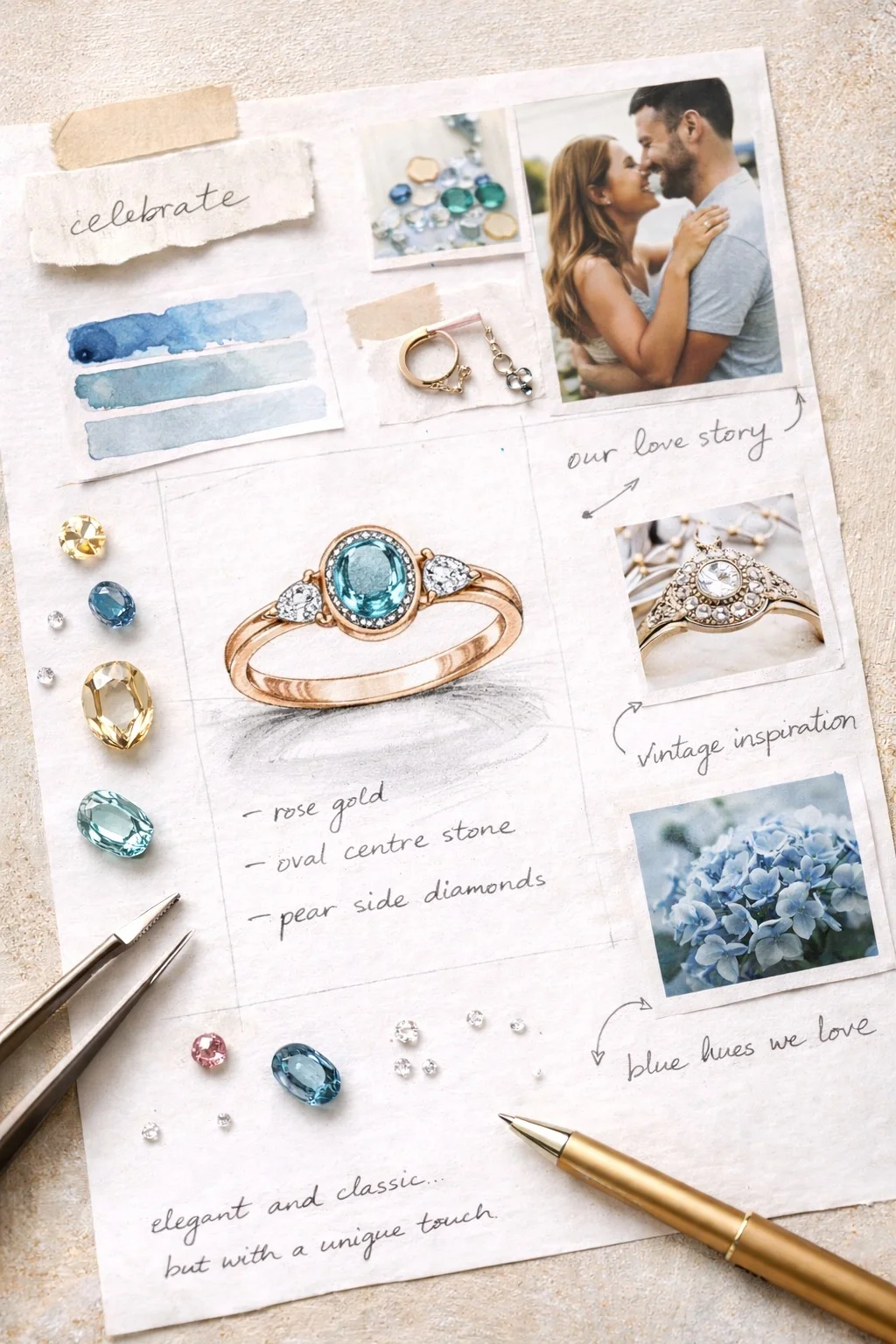
Jewellery design is often spoken about as if it begins with a beautiful drawing and ends with a finished ring. In reality, the journey from concept to completed piece is far more considered, technical, and collaborative than most people realise.
For those who have never commissioned custom jewellery before, the process can feel mysterious. How much input do you have? What happens after the first conversation? How do ideas become something tangible and wearable?
This guide explains jewellery design step by step, from the first sketch to the final finished piece, using Layaz’s bespoke process as a real-world framework. It is written to educate first-time buyers and to show how thoughtful design creates jewellery that lasts.
What Jewellery Design Really Means
Jewellery design is not just about how a piece looks. It is about how it functions, how it feels on the body, and how it holds up over decades of wear.
Good jewellery design balances:
aesthetics and proportion
comfort and durability
lifestyle considerations
A design that looks beautiful but feels awkward or wears poorly is not a successful design.
Where Jewellery Design Begins: The Initial Consultation
Every bespoke jewellery design begins with conversation, not drawings.
At Layaz, this starts with a 45-minute consultation, available Monday to Sunday, from 9am to 7pm, either in person or virtually. Many Auckland clients visit from suburbs such as Remuera, Parnell, Herne Bay, Ponsonby, Newmarket, and the CBD, while others connect from across New Zealand.
This conversation explores:
the purpose of the piece
how and when it will be worn
design preferences and dislikes
gemstone ideas or existing jewellery to redesign
practical considerations such as lifestyle and comfort
The goal is clarity, not commitment.
From Ideas to Design Direction
After the initial consultation, the design stage begins.
Within 2 to 3 working days, clients are presented with multiple design directions, each paired with clear price guidance. This stage is about exploring possibilities rather than locking anything in.
Design options may vary by:
setting style
gemstone orientation or cut
proportions and scale
metal choice
This phase ensures the design evolves collaboratively rather than being imposed.
What You Actually See Before Jewellery Is Made
One of the most common misconceptions about jewellery design is that the final piece appears without warning.
In reality, clients are shown multiple representations before anything is crafted.
At Layaz, this includes:
concept sketches to communicate design intent
CAD renders showing structure, proportions, and detail
exact replica models, often set with simulated gemstones
natural gemstone options, accompanied by certification
Seeing these stages allows clients to visualise, adjust, and refine the design before it becomes permanent.
Why CAD Design Matters in Modern Jewellery Design
Computer-aided design, or CAD, plays a crucial role in contemporary jewellery design.
CAD allows:
precise control over proportions
accurate stone settings
early identification of structural issues
visualisation from every angle
Rather than replacing craftsmanship, CAD supports it by ensuring what is imagined can actually be worn comfortably and securely.
The Role of Natural Gemstones in Jewellery Design
At Layaz, jewellery design always begins with the stone.
Natural gemstones are not uniform. Each stone has:
unique proportions
individual colour behaviour
inclusions that affect strength and beauty
This is why design follows the stone, not the other way around.
A sapphire may need a setting that enhances depth rather than sparkle. An emerald may require protective design choices. An alexandrite’s colour change influences metal selection and setting openness.
Design decisions are guided by what best honours the stone.
Gemstones Commonly Designed Around
Layaz frequently designs jewellery using natural:
sapphires
rubies
emeralds
diamonds
alexandrites
Each stone brings different design requirements, which is why custom design matters more than template settings.
Minimalist Design and Proportion
Minimalist jewellery design is not about making jewellery thinner or simpler for its own sake. It is about restraint and balance.
Key proportion decisions include:
band thickness that balances delicacy and durability
setting height that protects the stone without bulk
stone size relative to finger or neckline
smooth transitions for comfort
These details are where fine jewellery distinguishes itself from mass-produced pieces.
Jewellery Redesign as Part of the Design Process
Jewellery design is not limited to creating something new.
Many clients come to Layaz with existing jewellery they want to transform. This may include:
inherited rings
outdated settings
multiple small pieces to combine
Jewellery redesign allows existing gold and gemstones to be reimagined into something relevant, wearable, and personal.
This process follows the same design discipline as new pieces, with the added layer of preserving sentiment.
The Approval System: Designing Without Pressure
One of the most important aspects of bespoke jewellery design is trust.
At Layaz, approvals are obtained at multiple stages:
design direction approval
gemstone approval
replica or wax model approval
final finished piece approval before delivery
post-delivery confirmation
If the final delivered piece does not feel right, even after approvals, Layaz will remake it at no additional cost. This removes pressure and allows clients to engage honestly with the process.
Crafting the Final Piece
Once all approvals are complete, the jewellery enters the crafting stage.
Because Layaz works end-to-end in house, this stage is tightly controlled. Crafting typically takes 4 to 6 weeks, extending to 6 to 8 weeks only for exceptionally rare stones or complex designs.
In-house production allows:
consistent finishing standards
better communication between design and making
full accountability
This is where design becomes reality.
Case Study: Auckland Engagement Ring Design
An Auckland client visited Layaz from the city fringe to design an engagement ring.
The process began with broad inspiration and evolved through sketches, CAD renders, and a replica model. Proportions were adjusted to suit daily wear and finger shape.
The final ring felt effortless to wear and reflected the client’s original intent precisely.
Case Study: Tauranga Virtual Jewellery Design
A Tauranga-based client commissioned a bespoke pendant through virtual consultation.
Design options were shared digitally, replica models were reviewed remotely, and gemstone selection was finalised with video confirmation. The finished piece was delivered exactly as envisioned.
This case demonstrated how jewellery design can be collaborative even without physical proximity.
Jewellery Design Is a Process, Not a Moment
Good jewellery design cannot be rushed.
It is a process of listening, refining, testing, and confirming. The result is jewellery that feels considered rather than constructed.
When done properly, jewellery design creates pieces that remain relevant long after trends change.
Choosing Jewellery Design With Confidence
If you are new to custom jewellery, look for a process that:
explains each stage clearly
invites your input
shows you before making
removes pressure from decisions
These are signs of a design-led practice rather than a sales-led one.
Jewellery Design That Endures
The most successful jewellery designs are not those that impress immediately. They are the ones that feel natural to wear, meaningful to own, and timeless in their presence.
That is what thoughtful jewellery design makes possible.
