

Gold Jewellery Explained: 9K vs 14K vs 18K vs 22K
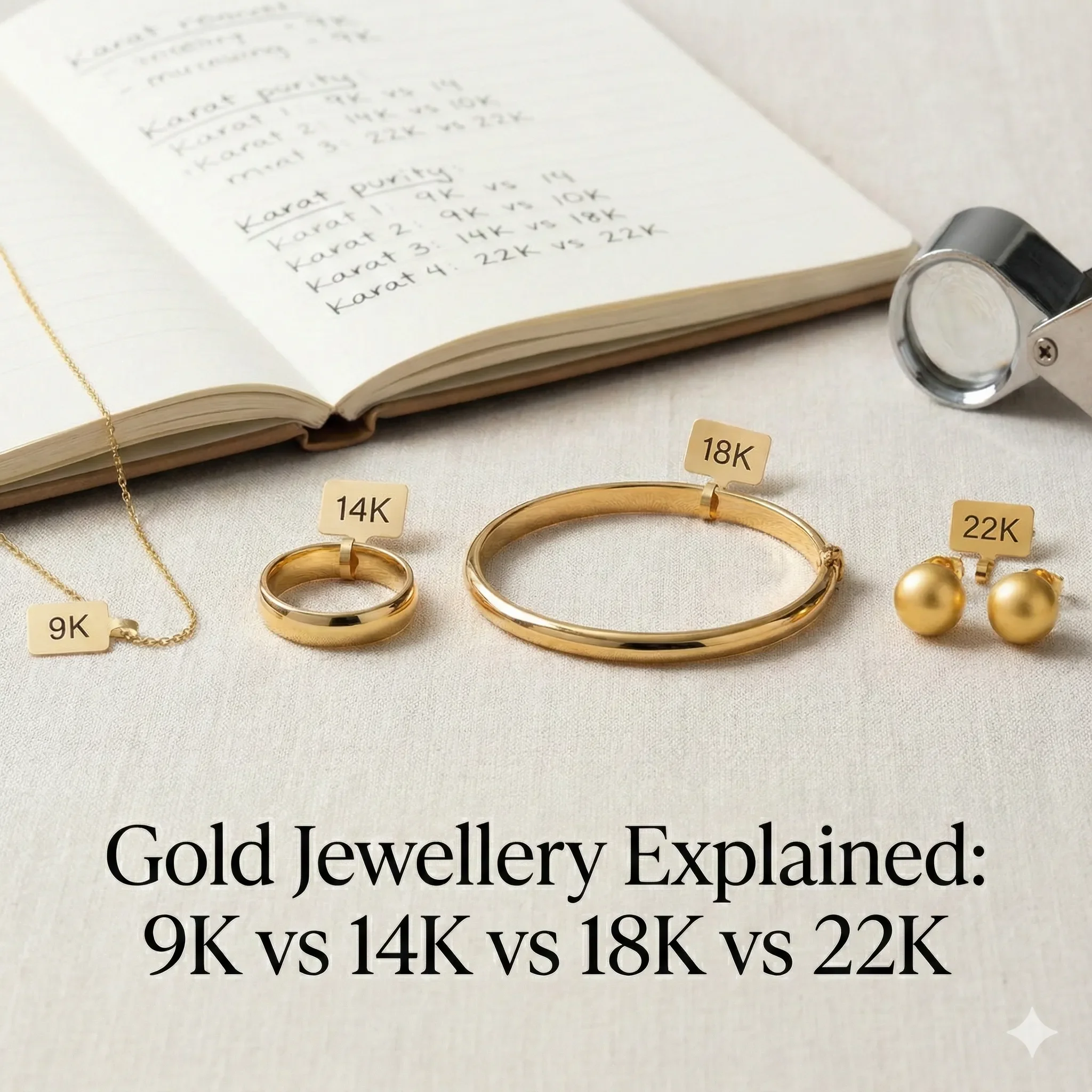
Gold has been treasured for thousands of years not because it shines, but because it carries story, meaning, and permanence.
Gold is one of the most symbolic materials on earth. Across cultures and generations, it represents love, devotion, and the timeless bonds that connect people through memory. Yet when it comes to choosing gold for fine jewellery, most buyers are unaware of how different gold purities behave in real life. Terms like 9K, 14K, 18K, and 22K feel mysterious and mathematical rather than meaningful.
At Layaz, we see this confusion often. Clients come to us from Auckland, Wellington, Queenstown, Tauranga and across New Zealand believing that higher carat always means better, or that lower carat means weak or inferior. Many assume that 24K gold, being the purest, must be the best. Others wonder why their 22K bangles bend easily or why their retail ring looks dull after a few months.
The truth is that gold purity influences everything from colour to durability to long term wear. Understanding these differences empowers you to choose jewellery that not only looks beautiful today, but lasts for generations.
This is the story of gold in a way that is simple, elegant, and deeply connected to the art of fine jewellery design.
Why Pure Gold Is Rarely Used in Fine Jewellery
Imagine a metal so soft it bends between your fingers. That is the beauty and challenge of pure 24K gold. It carries a rich, warm glow that has inspired cultures for centuries, yet its softness makes it impractical for modern jewellery.
Pure gold scratches easily, dents with pressure, and cannot hold gemstone settings securely. A sapphire or diamond placed in pure gold moves with each touch and eventually becomes unstable.
A Layaz client once visited us wanting her engagement ring made in 24K gold because she believed higher purity meant higher luxury. When we showed her how easily pure gold bends, she paused and finally understood that her gemstone would never be safe. What she envisioned was not purity, but permanence. We guided her toward a carat that gave her both beauty and strength. This shift in understanding is where education transforms expectation into appreciation.
Twenty four carat gold is beautiful. It is symbolic. It is culturally significant. But it is not suitable for everyday jewellery.
22K Gold: Beautiful Yet Gentle
Many regions of the world use 22K gold for traditional bangles, necklaces, and ceremonial pieces. Its colour is warm and glowing, with a deeper tone than lower carats. Yet it remains soft enough to bend or warp over time, especially when worn daily.
A client from Christchurch approached us with her grandmother’s 22K ring. The band had slowly flattened with wear and the prongs holding the gemstone had become misaligned. She was afraid to wear it. We redesigned the ring in 18K gold while preserving the original stone, keeping the emotional connection intact while restoring structural integrity.
This is the reality for 22K jewellery. It is beautiful and meaningful, but not ideal for pieces that must endure daily life.
18K Gold: The Ideal Balance of Purity and Strength
In the world of fine jewellery, 18K gold is the standard of excellence. It carries seventy five percent pure gold, giving it a vibrant colour and luxurious appearance. At the same time, the mixture of alloyed metals provides the strength needed for prongs, bands, bezels, and intricate craftsmanship.
When we recommend gold purity at Layaz, we often guide clients to 18K because it offers the perfect harmony between elegance and durability. It protects gemstones, resists bending, and maintains its colour over decades. It is the gold that becomes heirloom rather than accessory.
One of our clients from Auckland wanted a bespoke ring designed around a rare teal sapphire. The stone had a unique shape that required precise engineering. To ensure the prongs remained secure and the proportions stayed balanced, we crafted the ring in 18K gold. The result was a piece that felt luxurious in every sense while being durable enough to be worn daily.
Eighteen karat gold is the sweet spot where purity meets practicality and artistry meets endurance.
14K Gold: Durable, Reliable, and Perfect for Active Lifestyles
Fourteen karat gold contains fifty eight percent pure gold and a higher portion of alloy metals. Its colour is slightly lighter than 18K but still beautiful and refined. What makes 14K gold appealing is its durability, especially for those with active lifestyles or those prone to knocking their rings.
Layaz offers 14K gold for designs that require extra strength without compromising beauty. It is a popular choice for wedding bands, stacking rings, and everyday pieces that face more movement.
Many clients from Tauranga, Queenstown, and Hamilton choose 14K gold for practical reasons. They want something that feels luxurious yet is reliable for daily wear. It is still fine jewellery. It is still precious. It is simply engineered for resilience.
9K Gold: Why It Is Not Used for Fine Jewellery
Nine karat gold contains less than fifty percent pure gold. The rest is a mixture of other metals that significantly alter its colour and behaviour. Although it is affordable, it lacks the richness, longevity, and structural quality needed for high end jewellery.
At Layaz, we do not recommend 9K gold because it falls into the category of costume jewellery rather than fine jewellery. Its colour can appear dull, its surface wears faster, and its ability to hold gemstones securely is limited.
When clients ask why some jewellers offer 9K pieces, the answer is simple. Lower gold content reduces cost, which makes it attractive for commercial retail. But for meaningful jewellery that will be worn for decades or passed down as an heirloom, higher purity is essential.
Is Gold Jewellery Waterproof
This is one of the most common questions buyers ask today, especially those purchasing everyday pieces. The answer depends not on water itself, but on the gold purity and craftsmanship.
High purity gold such as 18K and 22K does not tarnish with water because gold does not react to moisture. However, the alloy metals mixed into lower karats can dull or change tone when exposed to water, skincare, chlorine, or salt.
Waterproof does not mean indestructible.
Waterproof means resistant to tarnish, not resistant to scratches or wear.
At Layaz, we advise clients that gold jewellery can be worn in water but should be treated with care, especially if gemstones are involved. Prongs, settings, and structural components deserve the same respect as the gold itself.
Which Carat Lasts the Longest
Durability is shaped by balance.
The higher the purity, the softer the metal.
The lower the purity, the stronger but less luxurious the gold becomes.
Eighteen karat gold lasts the longest as an heirloom because it maintains both beauty and structural integrity. Its colour remains vibrant and its strength supports complex designs. It can endure generations of wear when crafted well.
Fourteen karat gold follows closely, offering impressive durability for everyday use.
Twenty two karat and twenty four karat gold retain sentimental value but do not endure physical stress as well.
Longevity is always a balance between purity, engineering, and lifestyle.
What Gold Carat Is Best for Everyday Wear
For everyday rings, especially engagement rings, wedding bands, and signature pieces, 18K and 14K gold perform the best.
They resist bending, protect gemstones, and maintain appearance with far less maintenance than higher purity gold. They are designed for life rather than ceremony.
At Layaz, we recommend 18K for most bespoke creations because it reflects luxury while offering the durability needed to carry your story every day.
How Gold Choices Shape Bespoke Jewellery Design
Designing jewellery is a science as much as it is an art.
Gold purity influences structure, weight, gemstone safety, and long term performance.
When designing a bespoke piece, we consider:
the gemstone you choose
how deep or shallow the stone is
how it must be held securely
your lifestyle and daily habits
whether the piece is intended as heirloom
the symbolism behind your design
For prongs holding sapphires or diamonds, 18K offers the right combination of strength and elegance.
For bands with intricate curves or details, 14K provides enhanced resistance to wear.
For ceremonial pieces or traditional designs, 22K holds emotional and cultural significance even if it is softer.
Gold purity is not just a number.
It is an engineering decision that shapes the entire future of your piece.
This is where bespoke design becomes powerful. The gold is chosen for you, your story, and your life.
Why Gold Matters in Jewellery Longevity
Gold is more than a metal. It is the foundation of legacy.
The right purity protects gemstones, preserves shape, and keeps your jewellery safe through years of celebration, movement, and memory.
The wrong purity, chosen without guidance, leads to bending, dullness, loose stones, and premature wear.
Retail stores rarely explain this because their focus is on selling finished pieces rather than understanding lifetime wear. At Layaz, we guide clients through each choice with clarity so that their jewellery holds meaning not only on the day they receive it, but decades later when future generations wear it.
Your story deserves a metal that can survive it.
Conclusion
Gold carries both joy and memory. It holds warmth from the hands that wear it and the stories whispered as it is passed from one generation to the next. Choosing the right gold is choosing how your story will endure. Whether bright with the richness of 22K or balanced with the elegance of 18K, your jewellery reflects the life you live, the love you celebrate, and the legacy you create.
At Layaz, we help you choose the gold that will carry your story in its purest form.
